Governments improve statistics, the Leading Light improves lives: the rising cost of survival for ordinary Ghanaians in 2026
By Comrade Patrick
The following report is a case study on the current economic hardships of ordinary Ghanaians beyond statistics and headlines, and on the state’s failure to provide economic relief to its citizens. However, much of what we see in Ghana today will resonate with readers around the globe, both in the “First” and the “Third” World.
On paper, Ghana’s economy in 2026 appears to be improving. Inflation has fallen dramatically compared to the extraordinary high levels experienced in recent years. The Ghana Statistical Service reports annual consumer inflation at 5.3% in June 2026, while the economy recorded a 6.4% year-on-year GDP growth in the first quarter of 2026. Even the International Monetary Fund has acknowledged substantial stabilization, including a decline in inflation, stronger international reserves, improved confidence in the Cedi, and progress on public debt sustainability.
But there is another Ghana that cannot be fully captured by these numbers. It is the Ghana of the market woman who goes home with unsold goods because her customers no longer have enough money to buy them. It is the Ghana of the young graduate who has certificates, but no stable job. It is the Ghana of the parent who calculates whether to pay rent, school expenses, electricity, or to buy enough food for the family. It is the Ghana of the small-business owner whose sales have fallen even though operating costs remain difficult. And it is the Ghana of millions of ordinary citizens asking a simple but profound question: If the economy is recovering, when will ordinary people begin to feel the recovery in their pockets?
Economic recovery vs household relief
This is perhaps the most important economic conversation Ghana must have in 2026. In a capitalist economy, a fall in inflation is good news. Economic growth is good news. A stronger currency is good news. Rising reserves and improved fiscal conditions are good news. But lower inflation does not mean that prices have returned to where they were several years ago.
Inflation measures the rate at which prices are increasing; it does not erase previous price increases. Therefore, a family that has already experienced years of higher food, transportation, rent, and service costs may continue to feel financially squeezed even when the inflation rate falls sharply.
This distinction matters. For policymakers, economists and financial institutions, stabilization may be measured through inflation, GDP, reserves and debt indicators. For the ordinary Ghanaian, recovery is measured differently. It is measured by the price of a bowl of food. It is measured by transport fares. It is measured by rent. It is measured by school expenses. It is measured by whether a salary can last until the end of the month. It is measured by whether a young person can find decent employment. The economy must eventually work in the kitchen, the classroom, the market, the farm and the workshop—not only in economic reports.
The market woman’s economy
Walk through a Ghanaian market and the reality becomes immediately visible. The market woman is not an economist, but she understands inflation. She knows when the price of tomatoes rises. She knows when transport costs increase. She knows when customers begin buying smaller quantities. She knows when people who previously bought a full basket begin buying only what they can afford for the day. Her economic problem is not theoretical. If she buys goods at a higher price but cannot increase her selling price because customers cannot afford it, her profit disappears. Eventually, she may be forced to reduce stock, borrow money or leave the business altogether. Economic reports often ignore those millions of Ghanaians who earn their living outside conventional salaried employment. They are traders, farmers, mechanics, dressmakers, hairdressers, food vendors, artisans, drivers, repairers and small-scale entrepreneurs. They are not merely participants in the economy. They are the economy.
The young Ghanaian: educated but waiting
Perhaps nowhere is the frustration more visible than among Ghana’s youth. Every year, thousands of young people leave universities, colleges and training institutions with dreams of building careers and contributing to national development. Yet education does not automatically translate into employment. The Ghana Statistical Service currently reports an unemployment rate of 13.0%, based on its latest figure displayed for Q3 2025. Behind that percentage are human beings. There is the graduate living with parents because employment has not arrived. There is the young professional accepting temporary work unrelated to his or her training. There is the apprentice who wants to establish a business but cannot obtain affordable capital. There is the young person considering migration because opportunities appear more attractive elsewhere.
This should concern the entire nation. A country cannot achieve sustainable development if a significant portion of its energetic young population remains economically underutilized. Ghana needs an economy that does not merely produce graduates. It needs an economy that creates opportunities for those graduates to work, innovate, and build up the country.
Food security: When the family plate becomes smaller
Food is at the centre of the Ghanaian household. Yet food insecurity remains a serious concern. Ghana Statistical Service currently reports food insecurity at 38.1% in the third quarter of 2025. For a struggling household, economic hardship can mean changing what is cooked, reducing portion sizes or sacrificing nutritional quality. A parent may choose cheaper food because the family budget leaves little alternative. This is not simply an economic issue. It is an issue of health, productivity, education and national development. A hungry child may struggle to concentrate in school. A poorly nourished worker may be less productive. A farmer who cannot afford productive inputs may produce less food. The cycle can therefore reinforce itself.
The farmer must not be forgotten
Ghana cannot solve its economic difficulties while neglecting agriculture. The farmer is responsible for producing much of what the nation eats, and contributes significantly to rural employment and economic activity. But farmers face their own pressures: production costs, access to finance, storage, transportation, irrigation, markets and post-harvest losses. A stronger agricultural economy could accomplish several things simultaneously:
- Increase food production.
- Reduce excessive dependence on imported food that further increases Ghana’s international dependence.
- Create rural employment.
- Increase household incomes.
- Support agro-processing.
- Strengthen exports.
- Reduce pressure on food prices.
Agriculture should therefore be treated not merely as a traditional occupation but as a modern national economic industry.
Small businesses are carrying Ghana
From Accra to Kumasi, Tamale, Takoradi, Cape Coast, Ho and beyond, small businesses keep communities functioning. The provision of food, transportation, repairs, clothing, construction, personal services and countless other necessities depends heavily on small entrepreneurs. Yet many small businesses operate with limited capital. A business owner who makes a modest revenue may have to use most of it to pay rent, transport costs, utilities, school expenses and family obligations. That leaves little money for reinvestment. If Ghana wants sustainable economic growth, it must make it easier for small businesses to survive, expand and employ workers.
Government must measure success by living standards
Credit where credit is due: The government deserves acknowledgment where economic stabilization is achieved. The IMF reported in May 2026 that Ghana’s stabilization program had produced substantial gains, including lower inflation, improved reserves, stronger confidence in the Cedi and progress on debt sustainability. Compared to other “Third” World countries, Ghana isn’t doing too bad on these metrics.
But stabilization should be viewed as the beginning—not the end—of economic recovery. The next question must be: How do we convert macroeconomic stability into household prosperity? That is where policy becomes critical. The advantage of a socialist planned economy is that it can take bold and targeted measures to achieve prosperity for the people without having to rely on unpredictable and inefficient market forces that favour the rich more than anyone else.
Five priorities for a people-centred economic recovery
1. Make Job Creation a National Emergency.
Ghana needs an aggressive strategy for productive employment. Getting unemployed people to meaningfully contribute to national development is the key factor in building up the country and creating trust in the government. A government should prioritize sectors capable of absorbing large numbers of workers, including:
- Agriculture and agro-processing
- Manufacturing
- Construction
- Technology
- Tourism
- Renewable energy
- Creative industries
- Logistics
- Small and medium-sized enterprises
The objective should not simply be to reduce unemployment statistics. It should be to create decent, productive and sustainable jobs.
2. Give Small Businesses Affordable Capital.
In the new democratic phase, after a socialist revolution, but before fully eliminating all market forces, small business owners can be utilized as a progressive force to build up the country. Many of these entrepreneurs do not need handouts. They need opportunity. Government and financial institutions should expand access to affordable financing, business training, digital tools and reliable markets. Credit programmes should be transparent, accessible and designed around the realities of small businesses. A successful small business can become tomorrow’s employer and a way to channel the creativity of the people into relevant economic progress.
3. Build an Agriculture-to-Industry Economy.
Ghana should stop thinking about agriculture merely as the production of raw materials. The country must invest in the entire value chain. A farmer should be connected to: production → storage → processing → packaging → transportation → marketing → export. If Ghana can produce cocoa, fruits, cassava, maize, rice, vegetables and other commodities, it should also develop industries capable of processing more of these products locally. That is how agriculture can become industrialization. The “First” World is hungry for agricultural products from the “Third” World, but it usually robs us of the opportunity to make fair money with them because it moves processing them into its own territory. We need to take back what is ours and demand fair compensation.
4. Protect the Most Vulnerable.
Economic reforms must not place the greatest burden on people with the least ability to absorb it. Governments should strengthen targeted social protection for vulnerable households while improving access to healthcare, education and essential services. The goal should be to ensure that economic adjustment does not push struggling families deeper into poverty. The people will be much better able to unleash their productive and creative capabilities for the sake of national development if they know that the government has got their back; if they know that pursuing a business idea or a degree does not put them at the risk of financial ruin.
5. Fight Waste and Strengthen Accountability.
Every Cedi matters. Ghana cannot afford unnecessary expenditure, inefficient public institutions or poorly executed projects. Public money must produce measurable public value. Citizens have the right to demand transparency concerning government spending and public projects. Economic recovery must therefore be accompanied by stronger accountability. As for the political decision process, the ordinary citizen needs more than political arguments. The voter needs practical answers. How will jobs be created? How will food prices become more manageable? How will small businesses obtain affordable capital? How will Ghana reduce dependence on imports? How will public money be protected? How will young people move from unemployment to entrepreneurship and decent work? These questions should dominate Ghana’s economic debate. Political leaders should compete not merely over who can criticize the other side most effectively, but over who can present the most credible plan for improving the lives of ordinary citizens. That is what the people will hold them accountable for.
The danger of celebrating too early
There is a temptation whenever economic indicators improve to declare victory. Ghana should resist that temptation. The country has made important stabilization gains. But economic recovery is not complete simply because inflation has fallen or GDP is growing. The true test is whether ordinary families experience meaningful improvements in their standard of living. Growth must become inclusive. Investment must create jobs. Agriculture must create wealth. Small businesses must grow. Young people must find opportunities. And the benefits of economic progress must reach
communities outside the centres of political and economic power.
If capitalism, especially in a “Third” World country, was able to achieve these things, it would have long ago. The people of the Global South are not stupid, we know what a state and an economy need. The reason that our progress has been slow for so long is because we exist in an international economic system – capitalism-imperialism – that is not meant to work for us, but for the minority in the “First” World. It is about time that we take matters into our own hands and break out of this system.
Ghana’s economic future must have a human face
There is nothing wrong with celebrating economic progress. Ghana needs hope. But hope must be connected to reality. The country must pursue an economic model in which national development is measured not only by GDP growth, inflation and debt ratios, but also by the quality of life experienced by ordinary citizens. The Ghanaian worker wants dignity. The farmer wants a fair return for hard work. The trader wants customers who can afford to buy. The young graduate wants a chance. The parent wants to educate his or her children. The entrepreneur wants access to capital. The elderly person wants security. These are not extravagant demands. They are the foundations of
a decent society.
Conclusion: The economy must serve the people
Ghana’s economic recovery must ultimately answer one fundamental question: What does economic growth mean to the ordinary Ghanaian? If GDP rises but families remain unable to afford essential needs, the work is unfinished. If inflation falls but household purchasing power remains under pressure, policymakers must continue listening. If investment increases but young people cannot find decent jobs, the nation must rethink how growth is being generated. If national wealth increases but rural communities remain trapped in poverty, development is incomplete. The goal should never be economic statistics for their own sake. The goal should be human prosperity. Ghana has the resources, talent and entrepreneurial spirit to build a stronger economy. What is required is disciplined leadership, responsible public spending, productive investment, stronger institutions and policies that place ordinary citizens at the centre of national development. The market woman, the farmer, the teacher, the driver, the mechanic, the nurse, the artisan, the small business owner and the young graduate must all have a place in Ghana’s economic future. The time
has come to move beyond asking whether Ghana’s economy is recovering. We must ask the more important question: Is the recovery reaching the people? Because ultimately, an economy does not exist for statistics. An economy exists for people. And Ghana’s economic success will be truly meaningful only when ordinary Ghanaians can feel it—not merely in government reports, but in their homes, businesses, schools, farms, markets and daily lives.
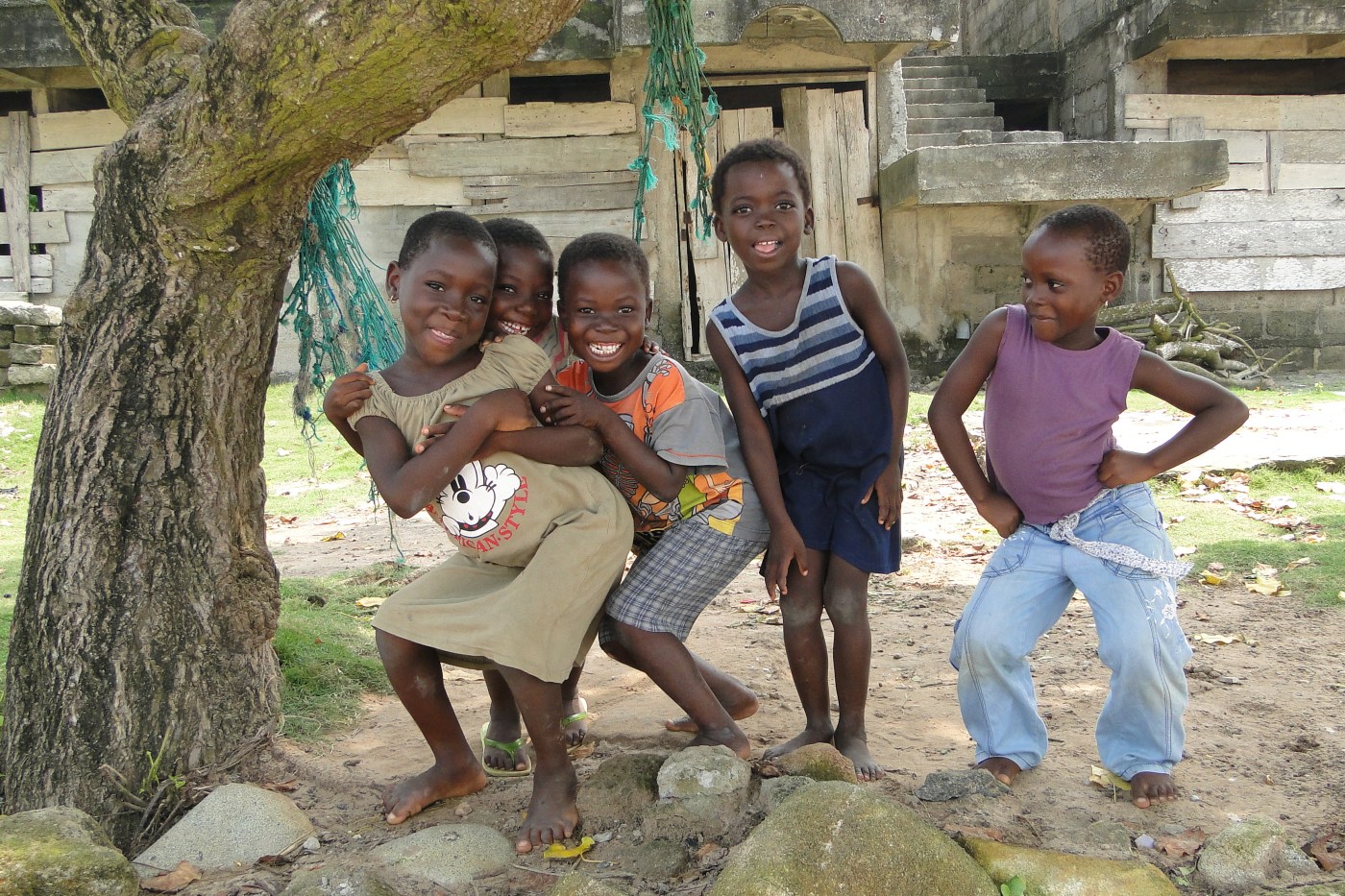
Image: Adam Jones from Kelowna, BC, Canada, CC BY-SA 2.0 https://creativecommons.org/licenses/by-sa/2.0, via Wikimedia Commons


Leave a comment