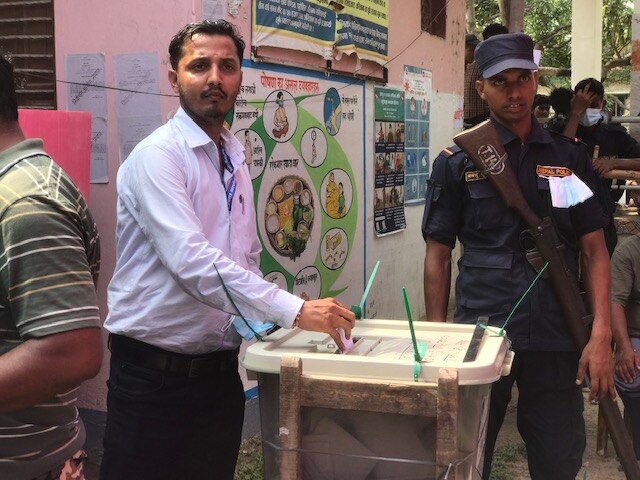
Hopes and expectations are bubbling up as Nepal closes in on the next general elections to be held on March 5, 2026. The upcoming elections are to replace the current interim government that came to power following deadly youth-led anti-corruption protests (the so-called Gen Z protests) and the subsequent toppling of the Marxist-Leninist-led coalition government in September 2025.
This political upheaval has seen many new parties and faces arise while the old ones are desperately defending their forts. While an absolute majority would give clarity to the path forward for the Himalayan state, this is highly unlikely to happen in the tumultuous landscape of Nepal’s multi-party political system.
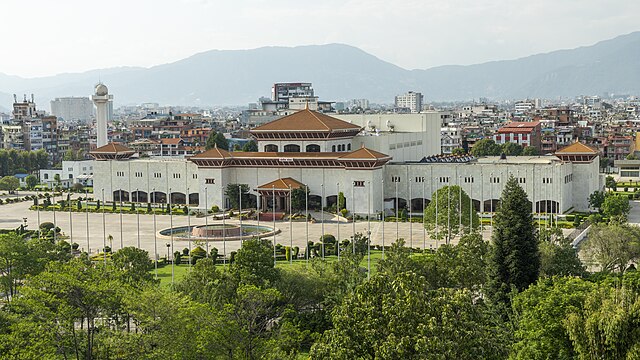
Nearly 19 million people (out of 31 million total inhabitants) are expected to vote in a few days, including 800,000 new voters.[1] At least 3.5 million Nepalis living abroad for work or study are excluded from the election as voting currently requires being present in the country.[2] Despite active campaigning, old and new parties alike have published their election programs only three weeks ago,[3] which has left Nepalis having to speed-read the manifestos of more than 65 parties before deciding the future of their country.[4] Nepal features a parliamentary government system in which half of the representatives are elected via a first-past-the-post system, and the other half via proportional party lists.
The parties and their promises
Nepal’s old parties have reacted to the threat posed by numerous new competitors with ambitious and progressive demands. We will only cover some of the highlights in this article. Sensing the damage done to the image of nominally “communist” parties in Nepal by the ousting of the Marxist-Leninist-led government, the revisionist chairman of the Maoist Centre (CPN-MC) and former leader of the Maoist civil war, Prachanda, has joined hands with smaller leftist parties to create the new Nepali Communist Party (NCP).[5] In their manifesto, among other things, they introduce the “One Municipality, One Smart School” concept aimed at improving digital literacy. They also promise to extend health insurance coverage to all citizens within five years.
The liberal-leaning Rastriva Swatantra Party (RSP) of former television presenter and journalist Rabi Lamichhane focuses on accelerating digitalized administration and providing concessions in government health services.
Nepali Congress (NP), the country’s main social democratic party and former junior partner of the recently toppled government coalition, commits to providing concessional loans for post-secondary education and implementing mandatory health insurance for all.
However, promising ambitious goals without any plan is a ritual for Nepali parties. NC promises the Nepali economy to grow to $2500 per capita income while RSP pledges $3000 (current per capita income of Nepal is around $1660). The previously ousted Communist Party of Nepal – United Marxist Leninists (CPN-UML) aims to provide 500,000 jobs annually and NCP pledges to create 1.5 million jobs in the next five years. Nearly all parties promise to establish social security programmes and to improve health insurance without providing a clear plan for how those will be implemented and financed.[6][7]

Disturbingly, Nepal’s growing economic inequality has hardly been mentioned during the campaigns at all. Multiple reports suggest a growing trend of wealth disparity between the rich and the poor. This is believed to be a result of the change from a largely state-run economy to a neo-liberal market economy.[8] While most manifestos obsess about corruption (a key driver of last year’s protests), they largely ignore underlying systematic issues such as land inequality, gender wealth inequality, disaster-induced inequality, and the privatisation of state-owned enterprises.
Reason for hope?
The fact that the Gen Z protests brought many new faces and parties onto the political landscape should nevertheless be regarded as an important milestone and reason for optimism. The Ujyalo Nepal Party (UNP) led by Kulman Ghising proposes to expand green energy coverage and providing farmers with government subsidies and free electricity.[9] Ghising is a proponent of technocracy and has previously proven his credibility as the former managing director of Nepal Electricity Authority, eliminating load shedding and providing indiscriminate light to the Nepali public.[10]
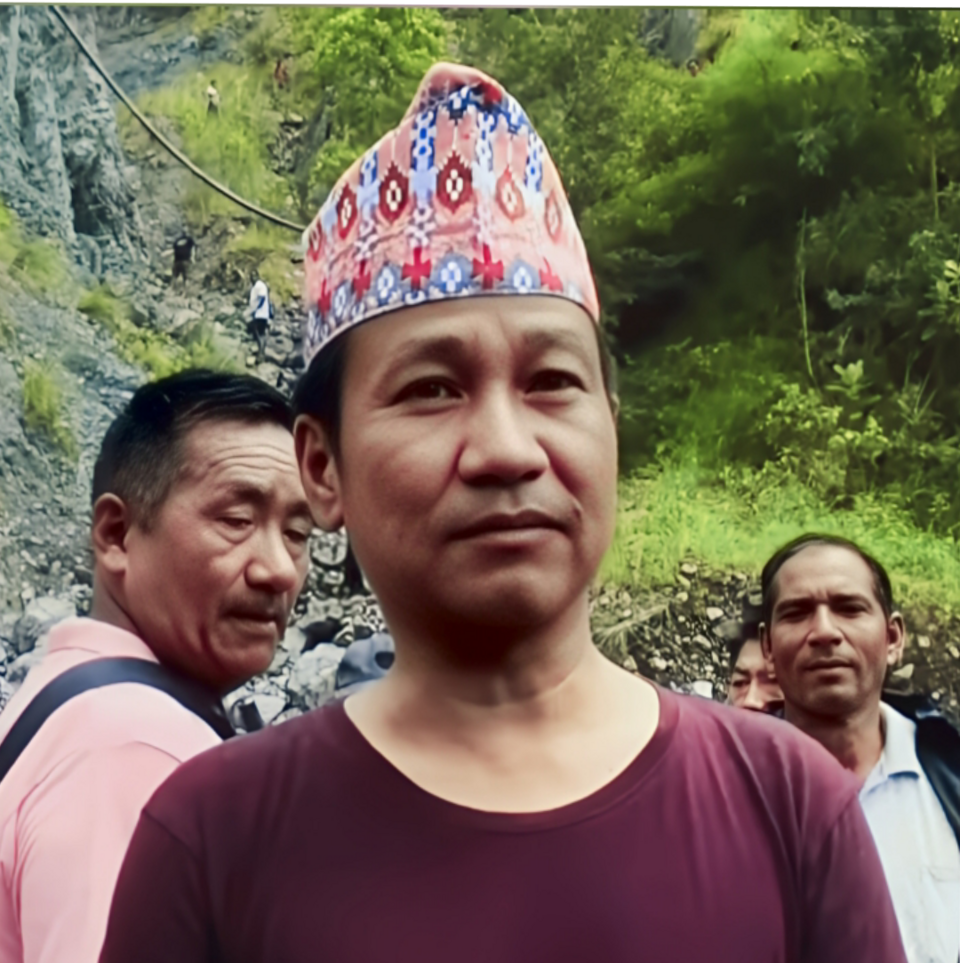
The Shram Sanskriti Party (SSP) led by Harka Sampang was one the the first new parties to be registered after the Gen Z protests and adopted their very own ideology of “Harkaism.” It emphasizes, among other things, the importance of “labour culture,” including voluntary labour donation, as well as national self-reliance through expanding domestic production.[11] Additionally, SSP wants to implement a more scientific and progressive tax system. Party leader Sampang himself is a controversial figure in Nepali politics. While some love him for his straight-forwardness, patriotic nature, and dedication, others have been driven away by his self-obsessed social media presence, stubbornness, and impulsive and unlawful actions as former mayor of Dharan.[12]
Balen Shah, a professional engineer, rapper, and former mayor of Kathmandu, will be contesting former prime minister K.P. Oli in his home constituency for RSP.[13] His performance as mayor has been praised for acting decisively against violations of law in the city and for initiatives to reduce nepotism and favouritism. However, looming over his achievements are criticisms about low spending and project mismanagement. RSP has put up Shah as their candidate for the prime ministership and has undergone a serious rebranding with this Nepali icon as its figure-head.
Another not-so-new face is NC’s new president Gagan Thapa. Although he has been in parliament four times, he has expressed the need to change the ways of his party. While NC positions itself as the most experienced party of Nepal, it’s championing a new leadership to communicate a readiness for making good governance reforms.[14]
Leftist politics in Nepal
The self-identified “communist” parties of Nepal continue to struggle. The image of the CPN-UML has suffered greatly from the Gen Z protests, and provocative speeches by Oli are adding insult to the injury. Oli has urged the Nepali public to safeguard the nation, as well as the constitution, and claims that UML capable of doing so. Oli has also denied any responsibility for the deaths during the Gen Z protests. He further claims that the investigation reports of the protests had not been published yet because they would prove his innocence and would call into question the legitimacy of the upcoming elections.[15][16] Prachanda, on the other hand, has once more proven his political skills. His new unified party is channeling its energy in rural areas where Maoist support has always been strongest and invokes sentiments of reform. He is himself confident for the upcoming elections, but shares that a coalition government is inevitable. Nevertheless, he pledges to work devotedly for the protection and enforcement of the constitution as he claims he had always done.[17][18]
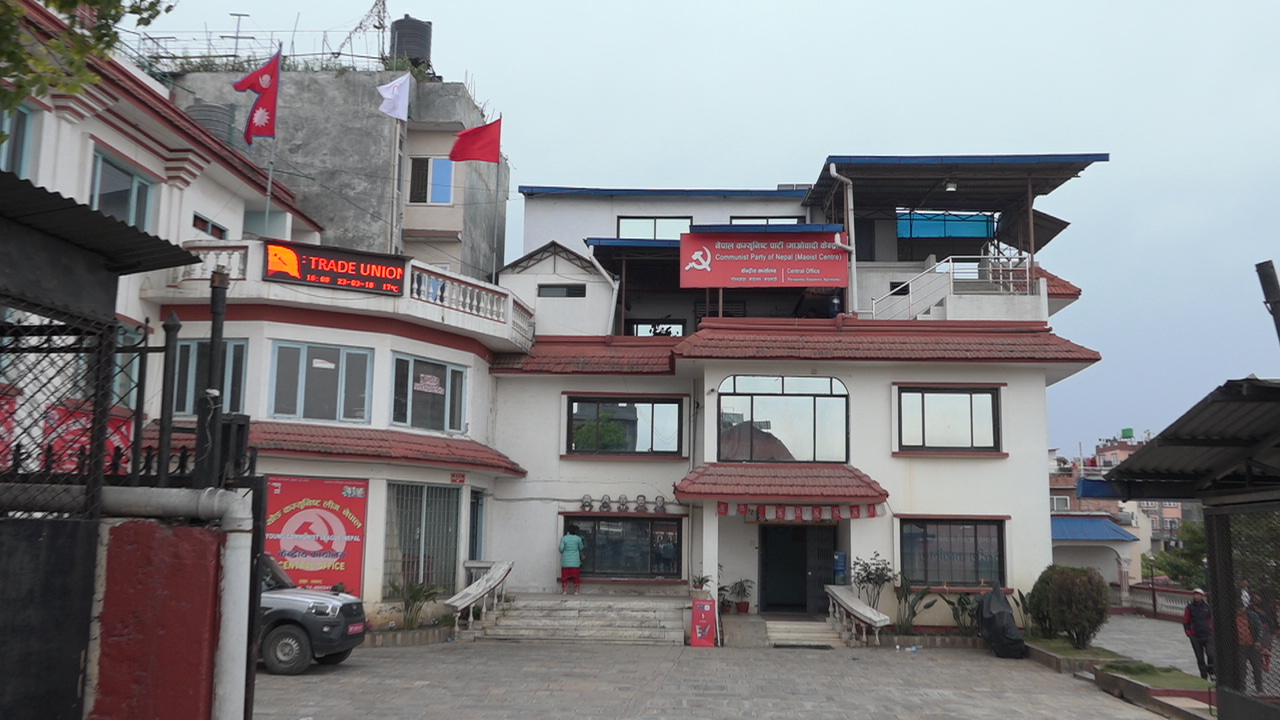
The truth is that both Marxist-Leninists and Maoists are rapidly losing favour with the people. Oli has chosen to die fighting, while Prachanda aims to opportunistically sail the seas of politics a little bit longer. However, with the Nepali youth alienated and their traditional voter base diminishing more and more, they will be fighting for their relevance soon enough. The people have made clear that they are fed up with the revisionism of both. Yet a comparison of the available party manifestos shows that people have not given up on the idea of an egalitarian and modern Nepal. Many programmes are obviously inspired by socialist ideas, but with the main figure-heads of the communist movement in Nepal betraying Revolutionary Science, the people lack guidance and a basic understanding of socialist development. Many ideas and initiatives brought forth by the new parties might be well-meaning, but are definitely over-ambitious and lack a clear vision. Nepal still seems to largely believe the myth that with the proper institutions and politicians it can become a developed state like the West, China, or Singapore. They ignore the role that imperialism has played in the development of these countries, that the capitalist state is an enemy to be toppled, and that Nepal can only prosper in the long run alongside a great coalition of all the exploited countries in the world against the imperialist exploiter countries.
These upcoming elections have failed to produce a Leading Light party that can tear the torch of Revolutionary Science from the abusive hands of the revisionists. However, we see a vacuum that is just waiting to be filled by a new generation of young and brave revolutionaries that can really guide Nepal out of the darkness of political inability. And when that time comes, the Leading Light Communist Organization will be sure to lend them its support.
Long Live the Revolutionary Movement of Nepal!
Notes
- https://www.bbc.com/news/articles/cev7z9802zjo
- https://www.mideq.org/en/inequalities/inequalities-resources/nepal-brief
- https://kathmandupost.com/politics/2026/02/12/parties-finalising-election-manifestos-as-ncp-publishes-its-document
- https://kathmandupost.com/national/2022/02/20/nepali-politicians-are-big-on-promises-but-short-on-delivery
- https://en.nepalkhabar.com/news/detail/1802/
- https://thehimalayantimes.com/nepal-votes/major-parties-manifestos-and-their-primary-promises
- https://www.imf.org/external/datamapper/profile/NPL
- https://policy-practice.oxfam.org/resources/fighting-inequality-in-nepal-the-road-to-prosperity-620607/
- https://thehimalayantimes.com/nepal-votes/ujyaalo-nepal-releases-manifesto-prioritising-economic-goals
- https://kathmandupost.com/national/2019/02/15/kulman-ghising-the-man-who-gave-us-light
- https://farsightnepal.com/news/social-economic-agendas-inside-unp-gatisheel-shram-sanskriti-manifestos/
- https://www.cijnepal.org/harka-sampangs-house-of-cards
- https://kathmandupost.com/politics/2026/01/28/can-nepal-s-viral-mayor-run-the-country
- https://kathmandupost.com/politics/2026/02/27/can-gagan-thapa-convince-nepal-that-experience-still-matters
- https://kathmandupost.com/national/2026/03/01/oli-asks-voters-to-back-uml-to-safeguard-constitution
- https://www.youtube.com/watch?v=b3mZr99ICYM
- https://www.youtube.com/watch?v=1ODE0QqoJl4
- https://risingnepaldaily.com/news/76398
Featured image: “A Nepalese voter cast their votes for the local election in 2022” by Ramesh Yadav, CC-BY 4.0 SA.


-070A4427.jpg)


Leave a comment